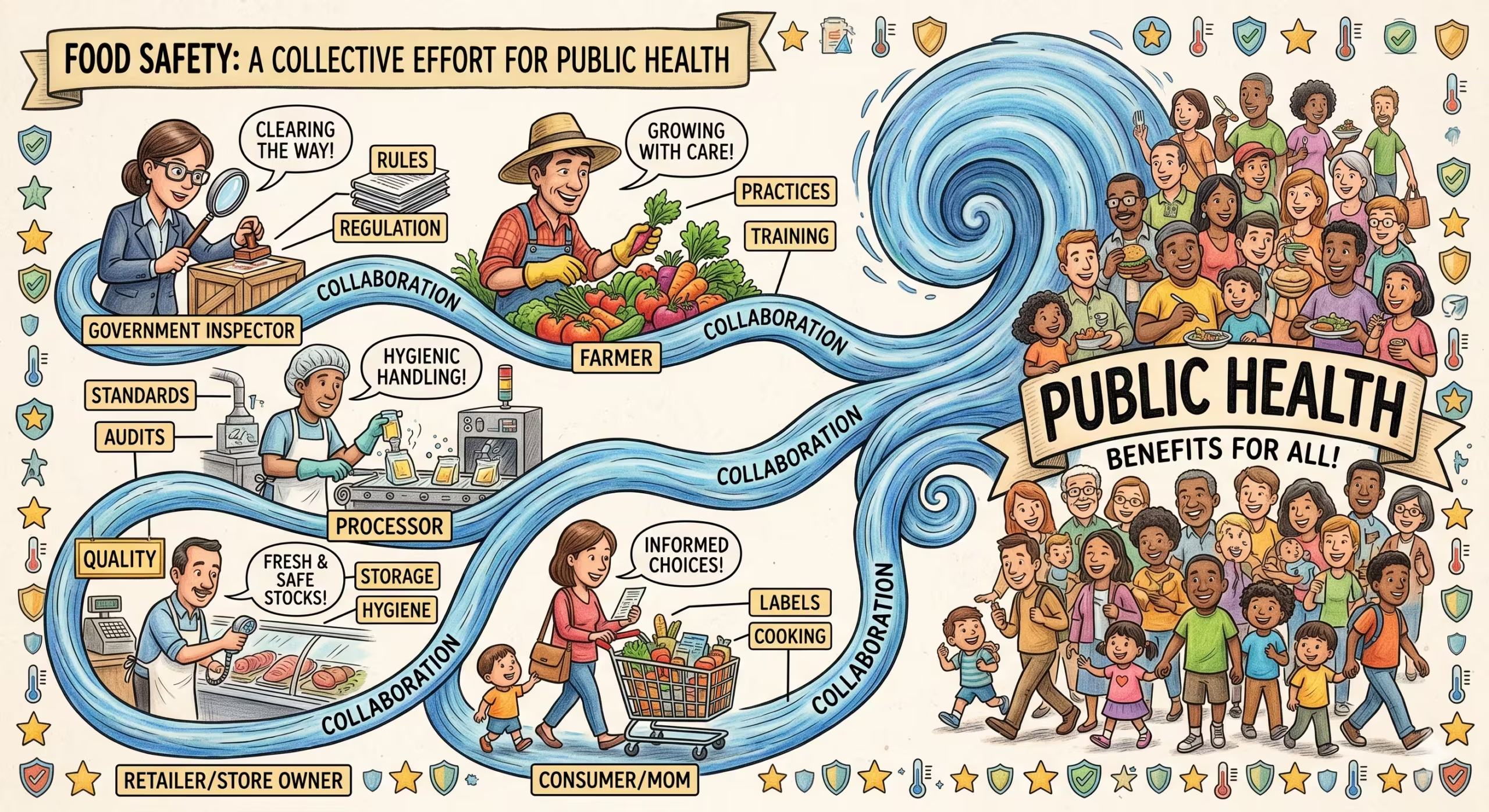
Food Safety: A Collective Effort for Public Health
Food safety is now a global priority and a shared responsibility. Experts believe that everyone must participate in maintaining high standards. This collective effort protects public health and strengthens local economies. The World Health Organization states that contaminated food causes many illnesses. Governments and private sectors must work together to reduce these risks.
The Impact of Food Safety on Society
Unsafe food threatens human health and economic stability. It creates a heavy burden on healthcare systems worldwide. Stakeholders emphasize that hygiene is not the only factor. Producers must also consider chemical and physical hazards. Proper handling prevents the spread of dangerous foodborne diseases. Clear communication helps people understand the risks involved. These measures ensure a more resilient food supply chain for everyone.
Building Competence Through Practical Training
Many companies focus on on-floor capability building for their staff. This approach helps businesses meet modern certification expectations. Classroom learning is often not enough for complex tasks. Workers need hands-on experience to master safety protocols. Consistent training reduces errors during the manufacturing process. It also builds a culture of accountability within the workforce. Skilled employees are the first line of defense against contamination.
Why Communities Must Prioritize Food Safety
Public health experts argue that safety is a community issue. It is no longer just a concern for the home kitchen. Local leaders now advocate for better food security policies. They want to ensure that all citizens have access to safe nutrition. Shared knowledge helps neighborhoods prevent large-scale health outbreaks. Transparent reporting builds trust between the public and food providers. Active community participation leads to better oversight and faster response times.
Ensuring Certainty in the Global Supply Chain
Global trade adds layers of complexity to how we handle food. Uncertainty often arises during long-distance transport and storage. Producers must track every step of the journey carefully. Digital tools now help monitor temperature and handling conditions. Clear labeling allows consumers to make informed and safe choices. Experts urge the industry to adopt more transparent practices. When safety is certain, the entire global market benefits from increased stability.